
Why I Became Vegan + My Top 3 Reasons To Go Vegan!
- Sydney Lerz

- Jun 10, 2020
- 10 min read

As I mentioned in my first blog, I decided to go vegan at the beginning of my sophomore year of high school, in 2015. During the past 5 years, I have learned so much about what it means to be vegan ranging from the physiology behind a vegan diet compared to a meat eater to learning how I can advocate for animals. Although there are many reasons why people go vegan, the top three reasons why I went vegan were for the animals, the environment, and my own health.
In terms of the health benefits of becoming vegan, by no means am I a health expert but I have included a lot of large scale research studies and documentaries to watch about the health advantages of a whole foods based vegan diet. While I believe that everyone could benefit from transitioning to a vegan diet, no one should jump right into it without talking to your doctor(s) and getting blood tests before hand to check for vitamin and mineral deficiencies as well as hormonal imbalances. If you have any underlying issues, especially with vitamins, minerals, or hormone levels you must do extensive research and most likely talk to a nutritionalist on how to become vegan in a healthy way for YOU.
1) For the Animals:
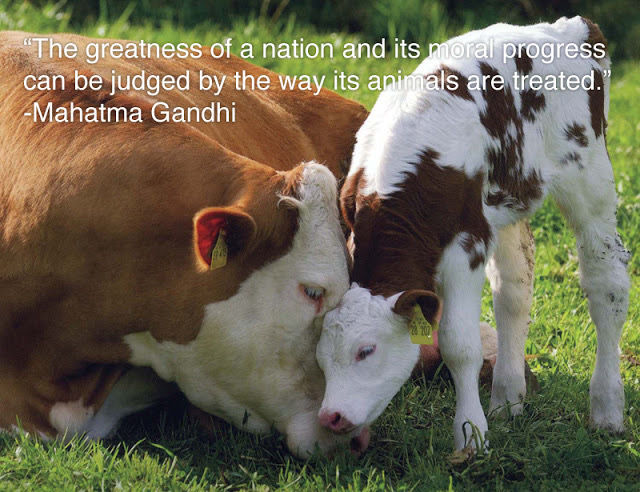
The first reason, and probably the most obvious reason why most people go vegan, is for the animals. Considering the fact that animals are being slaughtered for brief human enjoyment, consuming meat and dairy products is inhumane. Not only can we get all of our needed nutrition from plant sources, a proper and individualized vegan diet can actually have more of the essential macros, vitamins, and minerals than meat eaters. So, there is no need in our current society to consume meat and cause animals to suffer just to satisfy our taste buds.
Animals also feel the same fear and suffering that humans do. They watch other animals, even their children/parents get taken away from them or slaughtered right before their eyes, knowing that they are next. All livestock animals release the same hormones as humans do during stressful situations, cortisol and adrenaline, just before getting slaughtered. There are many videos on the internet where people go into factory farms and slaughter houses to rescue animals and show the world what really goes on. If you really want to see how horrifying these animals lives are right up the point that they are killed, click here for a great (but very graphic) video that goes in depth into what happens in slaughter houses across the world.
While the video linked above is an example of animals raised in factory farms then, even meat and dairy labeled as "humane", "free range", or "pasture raised" is not what you would expect it to be. The amount of regulations in the meat and dairy industry are very slim, let alone enforced. This is, in part, due to the large meat and dairy producer's lobbying efforts, especially Tyson and Perdue, to brush regulations and regulation enforcement under the rug. There is nothing humane about raising livestock when the only intention for these animals is to be killed and sold, regardless of what your label says. This ties into the economic benefit to factory farming where animals are bred solely to be killed and sold to make money. This process is usually meant to be as quick as possible, so that the economic profit off of these animal's lives is as quick as possible. One example of this is how female pigs often die prematurely because they are forced to give birth to 23.5 piglets, on average (sentientmedia.org). Nearly the same thing occurs on chicken farms. They are fed to grow more than they normally would in the wild at a such a rapid rate that they lose their ability to walk, even on "free range" farms.
2) For the Environment:

Did you know that it takes more land, energy, and water to produce one pound of meat compared to one pound of plant protein? Meat and dairy have a much higher carbon footprint than plant options. Animal farming is responsible for 14.5% of annual greenhouse gas emissions (sentientmedia.org). This is about the same amount of greenhouse gas emissions created by every single car, truck, plane, and ship on the planet (nytimes.com). The solution to this is simple. It is much more efficient to feed humans using the crops used to feed livestock, which are then produced for human consumption. A study done by the United Nations Food and Agriculture Organization found that it takes about 3 pounds of grain to raise 1 pound of meat.

Beef and lamb, in particular, have a large carbon footprint. This is because their stomachs contain bacteria to digest the food that they eat. That bacteria creates methane, a green house gas, that is released into the atmosphere. In comparison, seafood has the lowest carbon footprint out of all meat (nytimes.com). Dairy also has a much larger carbon footprint compared to plant based options. Cow milk has 4.5 times more CO2 emissions and takes 18 times more land to produce than almond milk. In comparison to soy milk, cow milk takes 22.5 times more water to produce the same quantity. Also, it takes 620 gallons of water to make one average beef patty, while it takes only 41 gallons of water to produce a soy based patty.
Land use is another major reason why consuming meat and dairy is unsustainable for the environment. As of 2019, 70 billion farm animals were raised for human consumption. This many animals requires more than 1/3 of Earth’s total habitable land and 16% of its fresh water. However, animal agriculture only accounts for 17% of the global diet (sentientmedia.org). In contrast, plant based foods grow on less than 12% of the Earth’s land to feed the remaining 83% of humans’ calories (sentientmedia.org). Imagine how many hungry individuals we can feed using the crops used to feed 70 billion farm animals!
Because of the growing global population and the increased need to feed people, livestock farming and growing crops to feed those livestock has lead to much deforestation. It is predicted that the population of humans on Earth by 2050 will be over 10 billion people. Keeping the average meat and animal product consumption the same for each person, all of the world’s remaining rainforests will disappear by 2050. The fact that in 30 years all of the rainforests will be gone if we do not change our diets is scary. Not only will the physical forests disappear, but that means many species will disappear with it as their habitats get destroyed.
3) For My Health:
The final major reason why I wanted to become vegan was to live the healthiest life possible. As I mentioned in the beginning, I am not a health expert and I cannot stress enough that a healthy vegan diet will mean different things for nearly everyone based on your own individual nutritional needs. However, the consumption of meat and animal products has a direct link to nearly all of the major leading causes of death in the American population, other than accidents and death by suicide, including the top two killers: (1) heart disease and (2) cancer. Would you believe that there is plenty of evidence that a whole foods vegan diet could actually reverse the leading cause of death in the U.S. and in the world? What about that a whole foods vegan diet could help prevent the second leading cause of death in the U.S.?

A large study done in 2019 found that a higher intake of plant based foods and a lower intake of animal foods was linked to a reduced risk for heart disease and death in adults (medicalnewstoday.com). Part of the reason this occurs is because animal products have high amounts of cholesterol. Also, “Interventional studies of plant-based diets have shown, for example, 90 percent reductions in angina attacks within just a few weeks” (Nutritionfacts.org). The American Heart Association also reported that because plant foods are typically higher in fiber, this leads to better heart health. If people are eating a diet based around fruit and vegetables, they also have a lower risk for obesity, a key factor in heart disease. Vegan, whole foods diets have even been shown to REVERSE heart disease: “Only one way of eating has ever been proven to reverse heart disease in the majority of patients: a diet centered around whole plant foods. If that’s all a whole-food, plant-based diet could do—reverse our number-one killer—shouldn’t that be the default diet until proven otherwise?” (Nutritionfacts.org).
In terms of cancer prevention, according to a 2017 review, a vegan diet may reduce a person’s risk for cancer by 15%. This may be due to the fact that plant foods are high in fiber, vitamins, and phytochemicals, which are basically chemicals that fight cancer. Also, eating a wide variety of fruits and vegetables leads to a higher intake, and a larger range of antioxidants, which fight cancer causing free radicals in the body, and decrease the amount of carcinogens entering the body through meat and dairy. Staying away from red and processed meat, which are known carcinogens, has been shown to reduce colon, prostate, and pancreatic cancer.
Not only can a vegan diet reverse heart disease, the leading cause of death in the world, and help prevent cancer, a whole foods vegan diet leads to less inflammation in the body. You might be thinking, well why does inflammation matter? Inflammation is actually one of the body's primary immune responses for fighting disease, toxins, and injury so that it can heal damage. However, when you are ingesting carcinogens from meat and dairy, your body produces an inflammatory response to find and kill these carcinogens. Although our bodies' natural inflammatory response helps heal and take care of out bodies, when an inflammatory response is constantly being triggered, like consuming the carcinogens found in meat and dairy or inhaling cigarette smoke, this can actually damage our bodies instead of healing it. Many life threatening diseases are caused by inflammation in the body like heart disease, cancer, Alzheimer's, dementia, asthma, arthritis, and more. So, wouldn't it be beneficial to have a diet that lowers inflammation in the body, and therefor lowers your risk for these diseases? In case you have not guessed, a whole foods approach to a vegan diet can lower inflammation in the body and help protect you from many life threatening diseases.
Three major contributors to inflammation in the body are trimethylamine oxide (TMAO), Advanced Glycation End Products (AGEs), and saturated fats. While TMAO and AGEs are produced in the body upon meat and dairy consumption, saturated fats are direct components of many meat and dairy products.
TMAO:
TMAO, trimethylamine oxide, is produced by our bodies upon red meat, eggs, fish, and poultry consumption (whitneyerd.com). One study found that "people with higher levels of TMAO in their blood may have more than twice the risk of heart attack, stroke, or other serious cardiovascular problems, compared with people who have lower levels. Other studies have found links between high TMAO levels and heart failure and chronic kidney disease" (health.harvard.edu).
Advanced Glycation End Products (AGEs):
AGE levels in the blood correlate to inflammatory markers like c-reactive protein, fibrinogen, tumor necrosis factor-alpha, vascular adhesion molecule-1, and the HOMA index (whitneyerd.com). High levels of AGEs in the body have "been linked to the development of many diseases, including diabetes, heart disease, kidney failure, and Alzheimer's, as well as premature aging" (healthline.com).
Saturated fats:
One study done in 2013 looked the effects of three high fat diets in mice, one of which was specifically high in saturated fat. It found that diets high in fat “are strongly linked with the accumulation of excess body fat, chronic inflammation, and metabolic perturbations, ultimately leading to poorer health outcomes” (ncbi.nlm.nih.gov). More specifically, they looked at a diet high in saturated fat, closely mimicking a typical American diet, and found that it led to “the greatest adiposity (absolute fat mass), macrophage infiltration, and inflammatory response” (ncbi.nlm.nih.gov). These three factors alone inhibit our body's ability to find and destroy toxins, viruses, cancer cells, and inflammatory markers. However, these three factors in combination make it very hard for our bodies to effectively fight off disease already present in the body, while creating more inflammation via the consumption of animal products.
Also, there are many diseases that orriginate from animals. Outbreaks of E. coli and Salmonella spread like wild fire in farms and factory farms. These diseases can be transmitted to humans by consuming raw or under cooked meat or animal products or eating foods that have been contaminated with E. coli via run off water. In many cases, this is why lettuce and other vegetables are often recalled.
Antibiotic resistance is another health issue that is very prominent in the United States, and it is increased by the consumption of meat and dairy products. This is because many animals are fed antibiotics in order to keep them healthy and allow them to grow so rapidly. However, this poses a large problem to human health because the more humans consume antibiotics or antibiotic resistant bacteria (either directly or through consuming meat and dairy) cause antibiotics to become inneffective. Humans then consume these resistant bacteria through their food, allowing them to be more susceptible to common viruses and bacteria, without a cure. "The World Health Organisation (WHO) says that antimicrobial resistance is one of the main threats to modern medicine, with growing numbers of infections, such as pneumonia, tuberculosis, gonorrhoea and salmonellosis, becoming harder to treat" (plantbasednews.org).

Lastly, the importance of veganism in terms of health has never been more relevant than it is today, considering the fact that we are in a pandemic that was caused by the mishandeling and consumption of raw meat. While COVID-19 could exist in a vegan world, would it have caused a pandemic if raw or uncooked bat meat was not eaten in the first place? I will leave that question up to you to decide!
Finally, here are some of my favorite Netflix documentaries about becoming vegan!
Cowspiracy: This is my absolute favorite documentary ever. It is incredibly informative about the environmental aspects of animal agriculture and how deeply rooted this issue is into politics and the economy. 11/10 recommend. Click here for the trailer.
Forks Over Knives: This documentary focuses on the health effects of changing to a vegan diet. It walks through the experiences of many people who have reversed their diabetes, cancer, and heart disease by simply becoming vegan. Click here for the trailer.
The Game Changers: This documentary interviews many athletes who have switched to a vegan diet and how it has improved their athletic success! It really combats the misconception that vegans do not get enough protein and that athletes "need" animal protein specifically to be successful. Click here for the trailer.
What The Health: Talks about obesity, diabetes, heart disease, and other life threatening diseases and their association with meat and animal products. This documentary also highlights how the pharmaceutical industry has a very negative role in keeping people healthy through lobbying. Click here for the trailer.
If you have read this entire blog, THANK YOU <3. This is something that I am incredibly passionate about (like you couldn't tell lol) so please pease please comment below or dm me on instagram @sydlerz.fitness with any questions or agreements/disagreements! Although I am not an expert, I encourage everyone to consider going vegan, or limiting your meat and dairy consumption, and doing your own research about a vegan diet.
Stay kind,
~Syd


Comments